Appearance anomalies
Look for impossible anatomy, wrong facial details, missing or extra parts, distorted posture, or a patient that looks too staged.
Primary guide page
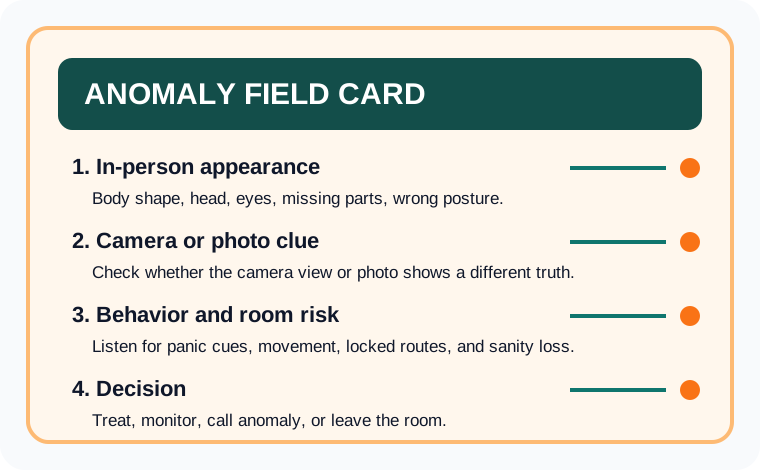
The best anomaly guide is not a giant rumor list. It is a repeatable field method: check the patient in person, compare camera and photo evidence, watch behavior, then decide whether the case is normal, suspicious, or dangerous.
Known structure
The Animal Hospital Fandom anomaly page separates clues into appearance anomalies, photo anomalies, cursed photos, security camera anomalies, and strategy notes. That is a strong structure for players because it matches how you actually investigate a room: your eyes, the equipment, and the behavior all tell part of the story.
Look for impossible anatomy, wrong facial details, missing or extra parts, distorted posture, or a patient that looks too staged.
Some suspicious states are easier to verify by comparing what a photo reveals against what you saw in the room.
When a photo itself becomes the clue, slow down. Treat it as a separate evidence channel instead of a normal snapshot.
Cameras can reveal a mismatch that is not obvious face to face. Use them before making an irreversible call.
Noise, movement, sudden pressure, and sanity loss can turn a normal treatment route into a survival problem.
One odd clue is a note. Two or three matching clues are a decision. This rule prevents panic calls.
Field method
Related guides
Class stats change how much risk you can take while checking anomalies.
Compare classesNormal treatment knowledge helps you spot what is not normal.
Review toolsSome threats behave more like enemy encounters than simple clue states.
Open monsters